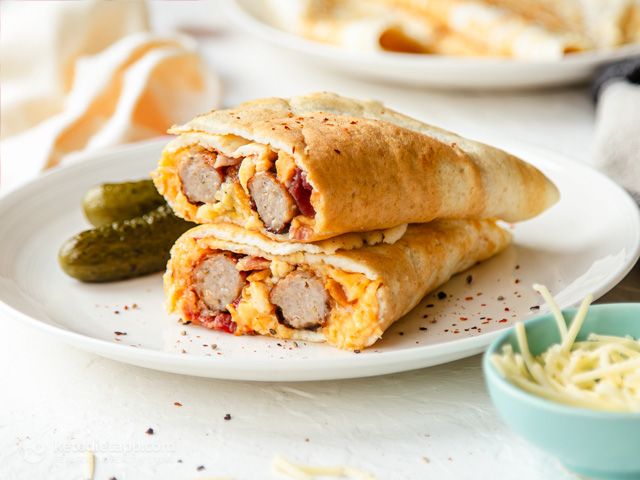
Egg white wraps have been around for a while — you’ve probably seen them in stores — but they’re not always easy to find, and when you can find them, they’re usually overpriced for what they are. I figured it was time to try making my own, and this recipe from Carolyn Ketchum’s new cookbook, The Protein Advantage turned out to be exactly what I needed.
I halved the original recipe because I was using them right away to make these loaded breakfast-style wraps, but they keep well, so doubling (or tripling) definitely makes sense if you're meal prepping.
Why I’ll Keep Coming Back to These Wraps
- Easy — They’re genuinely easy with minimal ingredients, no weird steps, and they just work.
- Common ingredients — I already had everything on hand (egg whites, protein powder, xanthan gum).
- Good texture — not too eggy, not crumbly, and they fold without breaking.
- Great for meal prep — you can make a bunch ahead and they don’t dry out or fall apart in the fridge.
- Carnivore-style — They’re basically zero-carb, so good for carnivore, keto, or any high-protein plan. Plus, the wraps are also dairy-free and nut-free in case that's what you're looking for.
Ingredients and Swaps
You only need a handful of basic ingredients to make these, and a few small tweaks can change the flavor or make them fully carnivore-friendly.
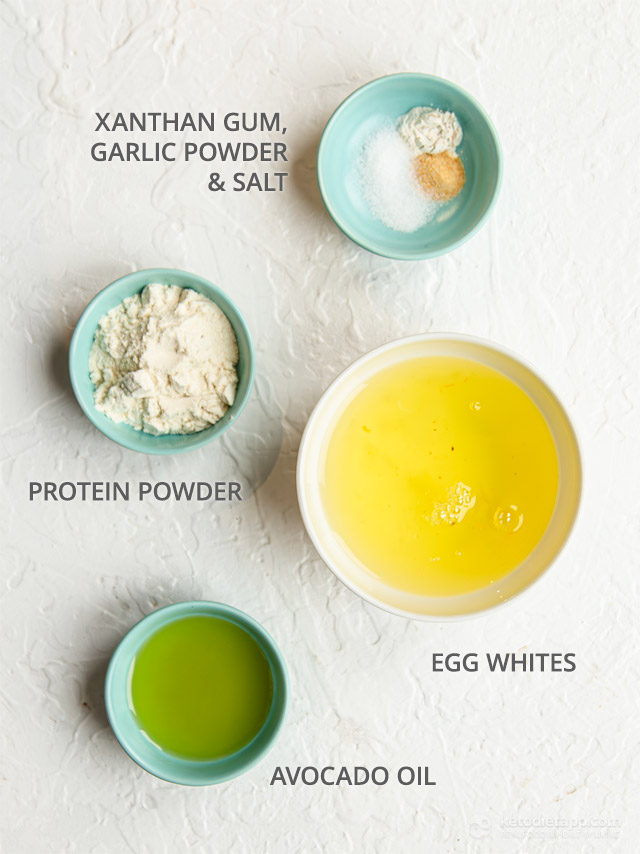
- Egg whites – Fresh or carton both work. If you're using whole eggs, separate them and save the yolks for something else (like mayo, aioli, hollandaise, or lemon curd). You could even add a few egg yolks to the scrambled eggs filling later on!
- Unflavored protein powder – I used whey, but hemp or egg white protein powder also work well (Carolyn notes that hemp may give the wraps a slightly grayish tint).
- Xanthan gum – This helps bind everything and gives the wraps that flexible, slightly chewy texture. You only need a pinch.
- Garlic powder (optional) – Totally fine to skip if you're going for a neutral or sweet version.
- Salt – Just a pinch for flavor balance.
- Avocado oil (for cooking) – You can also use ghee or lard, especially for a more carnivore-style version. Butter works too, but may brown a little faster.
A Few Things That Helped When Making These Wraps
These wraps are simple, but there are a couple of small things that can make the process even smoother:
- Go easy on the blending – Over-blending makes the mixture foamy, which can make the batter too thick or airy to spread evenly in the pan.
- Check the consistency before cooking – If your batter feels too thick (especially after sitting a minute), just add a splash of water and blend briefly to loosen it up.
- Low heat is key – A nonstick pan on low heat works best. If it’s too hot, the batter sets before you’ve had a chance to swirl it.
- Swirl fast – As soon as you pour the batter into the pan, tilt it to spread it thinly and evenly before it starts cooking.
- Once it’s set, you can raise the heat – If you prefer a slightly golden wrap (like I do), turn up the heat after the shape is formed, but don’t forget to reduce it again before starting the next one.
- Use a small pan – A 7–8 inch nonstick skillet gives you the right size for flexible, rollable wraps. Anything bigger, and they’ll be too thin and prone to tearing.
Meal Prep and Storage Tips
These wraps keep really well in the fridge, so they’re easy to prep ahead. Just make sure they’re completely cool before stacking, and place a piece of parchment or baking paper between each one to stop them from sticking. Stored in an airtight container, they’ll stay fresh for up to four days.
To reheat, a dry skillet works best — about 20 to 30 seconds per side is enough to warm them through without drying them out. You can also microwave them briefly if you’re in a rush. The fillings can be made ahead too. I usually store the sausage, bacon, and eggs separately and assemble when I’m ready to eat, especially if using cheese or any sauce.
Recipes You May Like
If you're into low-carb wraps or high-protein handheld meals, here are a few more ideas you might like.
- Omelet Wrap with Salmon & Avocado (uses whole eggs for the wrap)
- Ham & Cheese Unwich with Sriracha Mayo (uses lettuce for the wrap)
- Curried Chicken Sushi Hand Rolls (uses nori sheets for the wrap)
 |
 |
 |
Preparation time
Hands-on:    15 minutes
Overall:     20 minutes
Nutritional values (per serving, wrap)
| Total Carbs | 3.5 | grams |
| Fiber | 0.6 | grams |
| Net Carbs | 2.9 | grams |
| Protein | 39.2 | grams |
| Fat | 35.1 | grams |
| of which Saturated | 14.2 | grams |
| Energy | 489 | kcal |
| Magnesium | 32 | mg (8% RDA) |
| Potassium | 414 | mg (21% EMR) |
Macronutrient ratio: Calories from carbs (2%), protein (32%), fat (66%)
Ingredients (makes 3 servings)
Egg Wraps:
- 1/2 cup carton egg whites or 4 fresh egg whites (120 g/ 4.2 oz)
- 2 tbsp unflavored protein powder (15 g/ 0.5 oz)
- 1/4 tsp xanthan gum
- Optional: 1/8 tsp garlic powder
- Pinch salt
- Avocado oil, for cooking
Filling:
- 6 chipolatas, or 3 regular meaty gluten-free sausages (190 g/ 6.7 oz)
- 3 bacon slices, chopped (90 g/ 3.2 oz)
- 6 large eggs
- 1 tbsp unsalted butter (14 g/ 0.5 oz)
- 1/3 cup grated cheddar (38 g/ 1.3 oz)
- 3 tsp sriracha or sugar-free ketchup, or to taste
Instructions
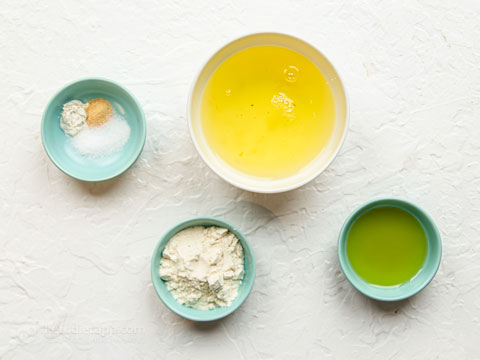
- Blend: In a blender or food processor, combine the egg whites, protein powder, xanthan gum, garlic powder (if using), and salt. Blend on low speed to combine (you don't want the mixture too fluffy).
- Cook: Heat a 7- to 8-inch (18 to 20 cm) nonstick skillet over low heat and brush it lightly with oil. Once hot, pour 1/4 cup (60 ml) of the mixture into the center. Immediately swirl the pan to cover the bottom.
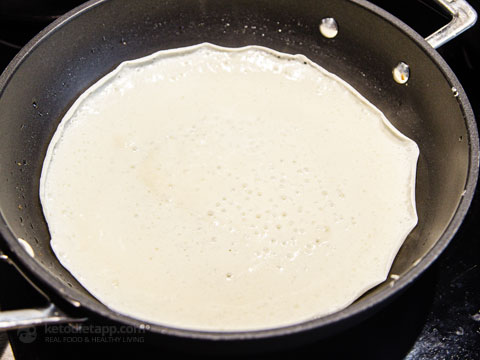
- Flip & Set: Cook for 1–2 minutes until the edges start to curl and lift easily. Use a spatula to loosen one side, then carefully peel and flip it with your fingers. Cook for 1 more minute, then let cool on a wire rack. Repeat with the remaining batter.
Note: Keep any wraps you are not planning to use immediately in an airtight container in the refrigerator for up to 4 days. If you prefer a slightly golden wrap, turn up the heat after the shape is formed, but don’t forget to reduce it again before starting the next one.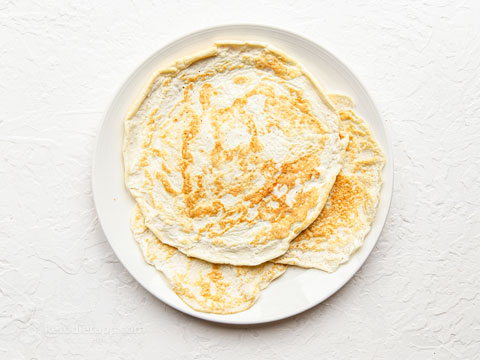
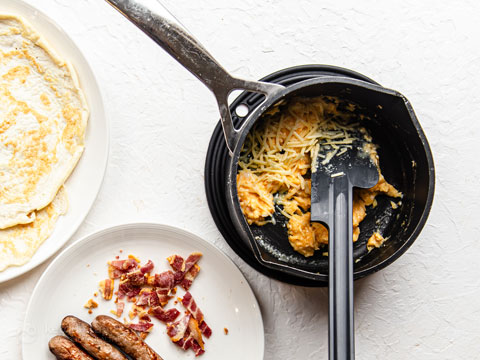
- Crisp the Proteins: Place sausages and chopped bacon in a skillet. Cook until the sausages are browned through and the bacon is perfectly crisp.
Note: You can also use an air fryer at 360 f (180 C) for 8–10 minutes for a hands-off version (bacon and chipolatas). If you use regular sausages, add 5 more minutes to the baking time. - Scramble the Eggs: Whisk the whole eggs with a pinch of salt. Melt butter in a hot pan and cook the eggs, stirring constantly for about 60 seconds. Keep them slightly "soft"—don't overcook! Stir in the grated cheddar until melted and creamy.
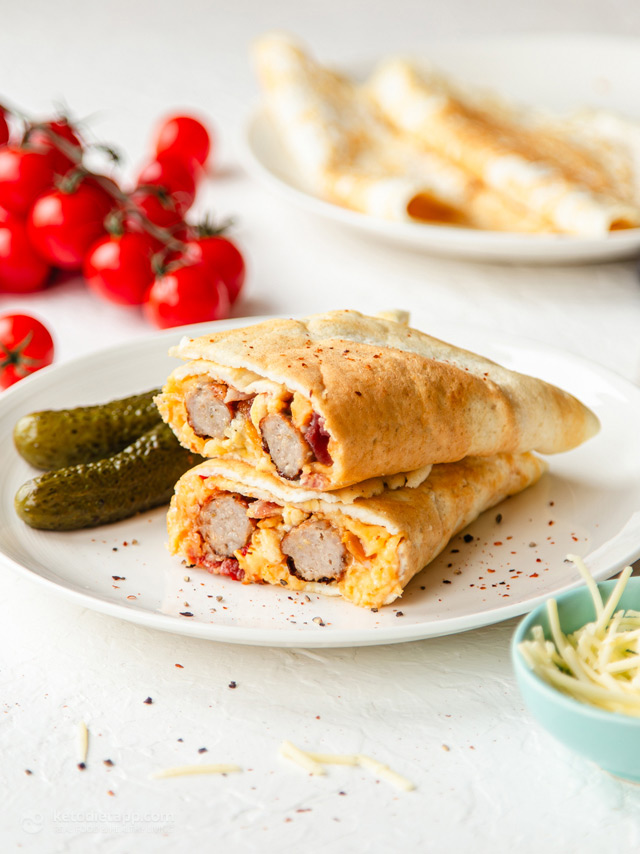
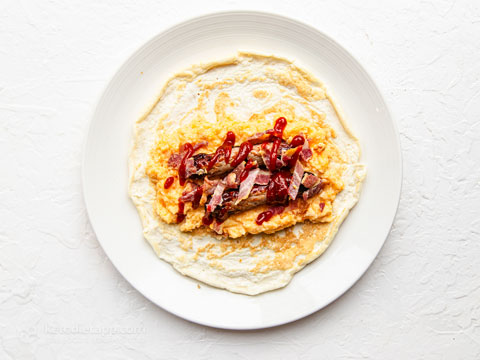
- Assemble & Serve: Lay a wrap flat. Spread the cheesy scrambled eggs horizontally across the center. Top with the sausages (cut lengthwise if using large ones) and crisp bacon. Drizzle with sriracha or sugar-free ketchup.
- Serve: Fold tightly and slice in half. These wraps are best served warm. If meal prepping, individual fillings can be kept separately in the fridge for up to 3 days.
PS: If you're looking for more simple, high-protein meals that with with intermittent fasting, check out my Fast Keto ebook!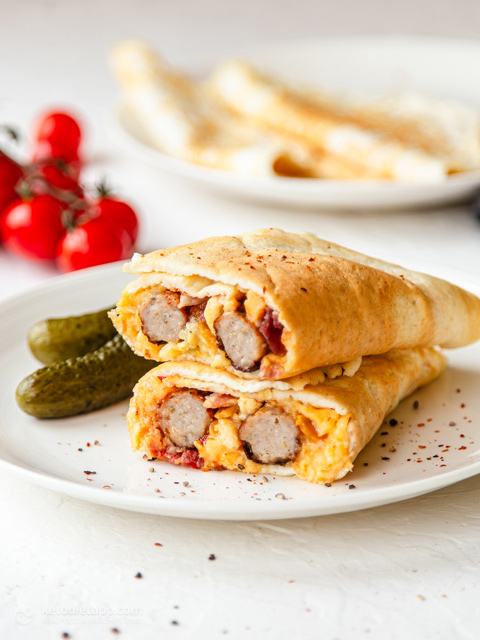
from KetoDiet Blog https://ift.tt/tFxcX6I
via IFTTT